
Flying your drone legally
Remote Piloted Aircraft Systems (RPAS) or Uncrewed Aircraft Systems (UAS) – commonly known as Drones – have grown in popularity and in their sophistication over the last few years. There are a wide variety of Drones in service today from small hobby machines to large commercial aircraft weighing many tons. Drones can be either fixed-wing or multi-rotor (or a combination of both), but the most common type of drone used by hobbyists and the public are what are known as ‘Quadcopters’, using 4 rotors to fly.
In the UK, airspace is regulated by the Civil Aviation Authority (CAA) on behalf of the Government. The CAA publishes a Drone & Model Aircraft Code, which provides the latest rules and advice for Drone users. These rules change regularly so it is always best policy to review the CAA website for the latest guidance.
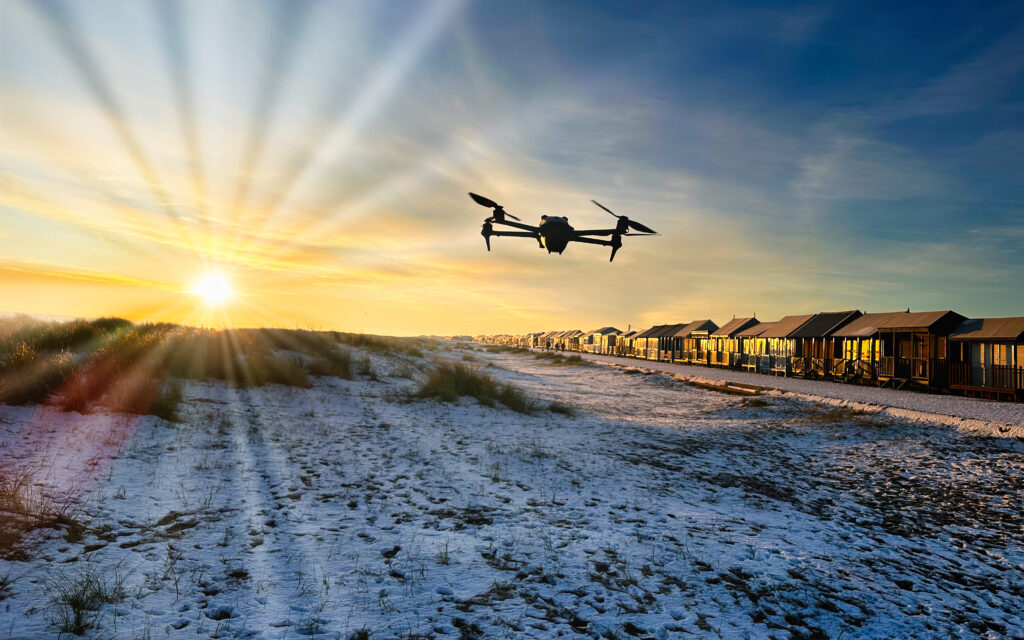
According to the CAA, ‘The UK’s drone rules are based on the risk of the flight – where you fly, the proximity to other people, and the size and weight of your drone’.
The rules don’t apply if you are flying indoors. Flights within buildings, or within areas where there is no possibility for the drone to escape into the open air (such as a closed netted structure) are not subject to aviation legislation.’
What you need to fly your drone legally in the UK
There is no such thing as a ‘Drone License’; instead, what you need is to get an ID.
The IDs you need depend on the weight of your drone or model aircraft and whether it has a camera.
You must get a Flyer ID if you want to fly a drone or model aircraft that weighs 100g or above.
You must get an Operator ID if you own or are responsible for a drone or model aircraft that:
- weighs 250g or above
- weighs 100g or above and has a camera
You don’t need a Flyer ID or Operator ID to fly a drone or model aircraft that weighs less than 100g. You must be 18 years old or over to hold an Operator ID.
So, in practice, most people will need BOTH an Operator ID and a Flyer ID.
Remember, even if you do not need to register, you must still follow the applicable rules summarised in this Drone and Model Aircraft Code when you fly.
You can register and find more information at register-drones.caa.co.uk
If you’re not able to use the online service, you can call 0330 022 9930, Monday to Friday, 8:30am to 4:30pm.
It is against the law to fly a drone or model aircraft without having the required IDs. You can also be fined for breaking the law when flying. In the most serious cases, you could be sent to prison.’
Passing the CAA test is highly recommended even if you don’t plan to fly a drone weighing more than 100g, but the online test should not be compared to the more advanced and certified training that Professional Remote Pilots, such as our Remote Pilot, Fraser, have completed.
A key matter in relation to Drone usage is the respect for the privacy of those who are not involved with any Drone operation. FMC Drone Services takes this issue very seriously and we are committed to the respect of the privacy of those neighbours and bystanders who are not involved with our operations.
UK Drone Operating Categories
UK drone rules are based on risk and divided into three categories:
- Open
- Specific
- Certified
The Open category is intended for low-risk drone flights, for example because you are flying a lightweight drone or operating in the countryside.
The Specific category is for higher risk flights such as flying a heavier drone over an urban area. To be allowed to fly in this category you will need an operating approval.
The Certified category is for large drones which must meet specific safety certifications along the same lines of a crewed aircraft.
In the UK, airspace is regulated by the Civil Aviation Authority (CAA) on behalf of the Government. The CAA publishes a Drone & Model Aircraft Code, which provides rules and advice for Drone users.
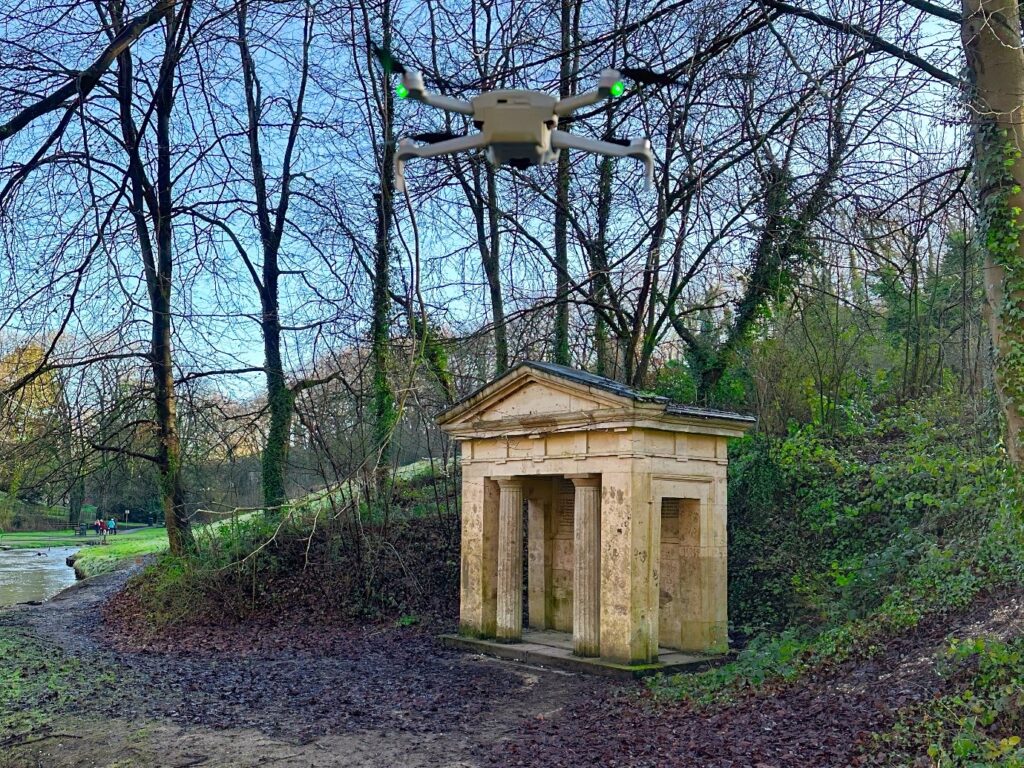
FMC Drone Services currently operates within the Open Category with our Remote Pilot, Fraser, holding an A2 Certificate of Competence. We believe that this allows us to complete all the mission types currently needed to serve our customers.
That said, we have previously held a CAA Operational Authorisation for commercial projects which we have completed in the Specific Category are fully prepared to apply for another CAA Operational Authorisation to work in the Specific Category should we deem this is required to serve our clients.
Our Remote Pilot, Fraser, holds a General Visual line-of-sight Certificate (GVC), which is a pre-requisite of gaining an Operational Authorisation – and this also allows him to work for other organisations who hold their own Operational Authorisation. The GVC course involved him demonstrating practical flying competence using a variety of drones as well as more advanced theory. Fraser is currently working on converting his GVC to the latest Remote Pilot Certificate (RPC) Level 1 Part A.
Fraser also holds a Level 4 Diploma in the Remote Piloting of Unmanned Aircraft Systems for Commercial Operation and, as part of that course, he has already thoroughly prepared our CAA application for when it is needed again.
Fraser has also completed specialist Level 4 qualifications in Surveying, Mapping and Photogrammetry. He is however NOT a qualified RICS Surveyor, although we often work with them on projects.
In addition to these professional qualifications, FMC Drone Services has full commercial insurance to cover our business operations. This includes full Public Liability and Professional Indemnity Insurance.
FMC Drone Services is also registered with the Information Commissioners Office and complies with General Data Protection Regulations and the UK Data Protection Act 2018, meaning that we take privacy very seriously and manage our clients data with the upmost care and due diligence.
When you choose a Drone Pilot, it is vital that you check their credentials and experience as it will show you the level at which they can safely operate.
Beyond Visual Line Of Sight (BVLOS) flying
At present, most drone operators including us must keep all flights within Visual Line Of Sight (VLOS) so that the Remote Pilot can see the airspace around their aircraft and operate safely.
One of the key subjects in the drone industry is that of Beyond Visual Line Of Sight (BVLOS) flying. This is seen as a key enabler to allow organisations to fly on more missions that currently are prohibited to most operators – such as long range infrastructure inspection flights, drone deliveries and offshore work, and operating in Atypical Airspace Environments (AAE), amongst other things.
The CAA is developing a policy programme for BVLOS operations, which includes subjects like airspace modernisation and Remote Pilot competency.
FMC Drone Services is monitoring these developments closely and is preparing our people to be qualified to work in BVLOS missions where needed. Fraser’s work to convert from a GVC to the RPC is just the beginning of these personal development plans. Watch this space!
Flying your drone in Europe
Many people take their drones to Europe to capture special moments whilst they are on holiday and for work purposes – but did you know that, following Brexit, your UK drone qualifications and IDs are not valid in Europe?

The European Aviation Safety Agency (EASA) manages all aspects of aviation safety across Europe and is the equivalent of the UK CAA.
If you are a resident of a non-EASA Member State (like the UK) and plan to visit and operate a drone in an EASA Member State, you need to register as a drone operator with the National Aviation Authority of the first EASA state you intend to operate from. Once you are registered in your host EASA Member State, this will be valid across the rest of EASA Member States. You don’t need to register in another EASA Member State again.
You also need to train and pass the drone pilot’s certificate online exam and get the European certificate in any EASA Member State. Some National Aviation Authorities offer the training and exam in English. And of course, you need to comply with the European Drone regulations.
In short, this means that you will need to pay to get an EASA Operator ID and complete an online course. It also means that if you want to fly larger drones in the A2 category, you will need to complete the EASA equivalent of the A2 Certificate of Competency. These courses are very similar to what you would complete in the UK and, whilst the rules are similar, they are not the same.
Where it gets complicated for UK pilots who normally reside in the UK is that some EASA countries will let you take a competency test but will not provide foreigners with an Operator ID. For example, FMC Drone Services’ Fraser holds a Dutch EASA competency certificate but has a Greek Operator License as he trained through a Dutch company who offered courses in English, but as a foreigner could not get a Dutch Operator ID. As he was flying on holiday in Greece, he managed to get a Greek Operator ID.
Once you have an EASA Operator ID you will need to remove your UK ID from your drone and replace it with the EASA ID whilst you are abroad. You will also need to ensure that you have programmed that ID into your drone (something that you don’t currently have to do for Class 0 Drones in the UK). You won’t easily be able to do that whilst you are in the UK, but once you are in Europe, this option will open up on your drone software – like DJI Fly.
You should also confirm that any insurance you have for your drone is valid abroad – this is essential if you plan to operate commercially.
And don’t forget to explore the European Drone Apps, which you can use to help you fly safely when abroad as not all UK Apps cover mainland Europe.
Here are some useful links to help you navigate this minefield:
- EASA Drones Site
- Drone Class – A Dutch Company that offers online EASA training in English that we have used (other companies are available!).